

20.02.2026
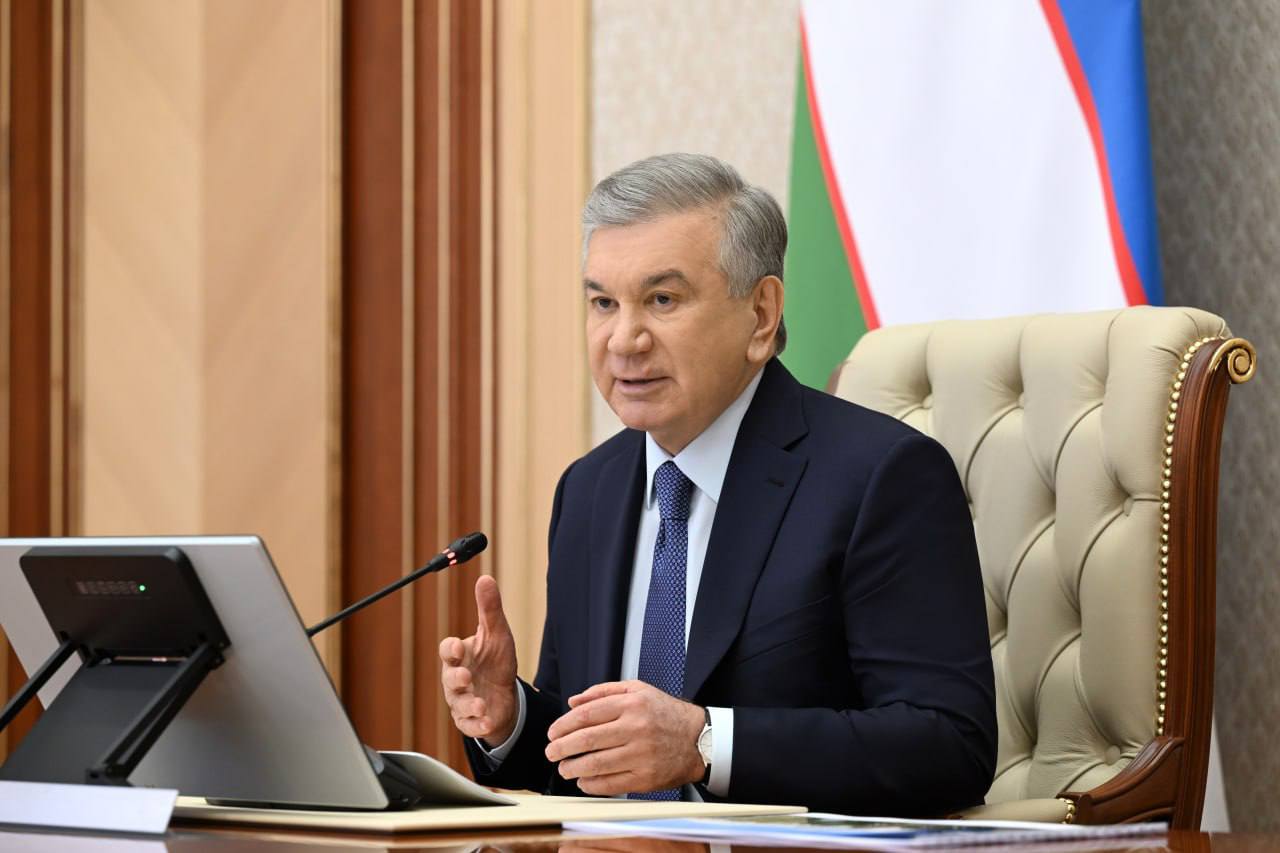
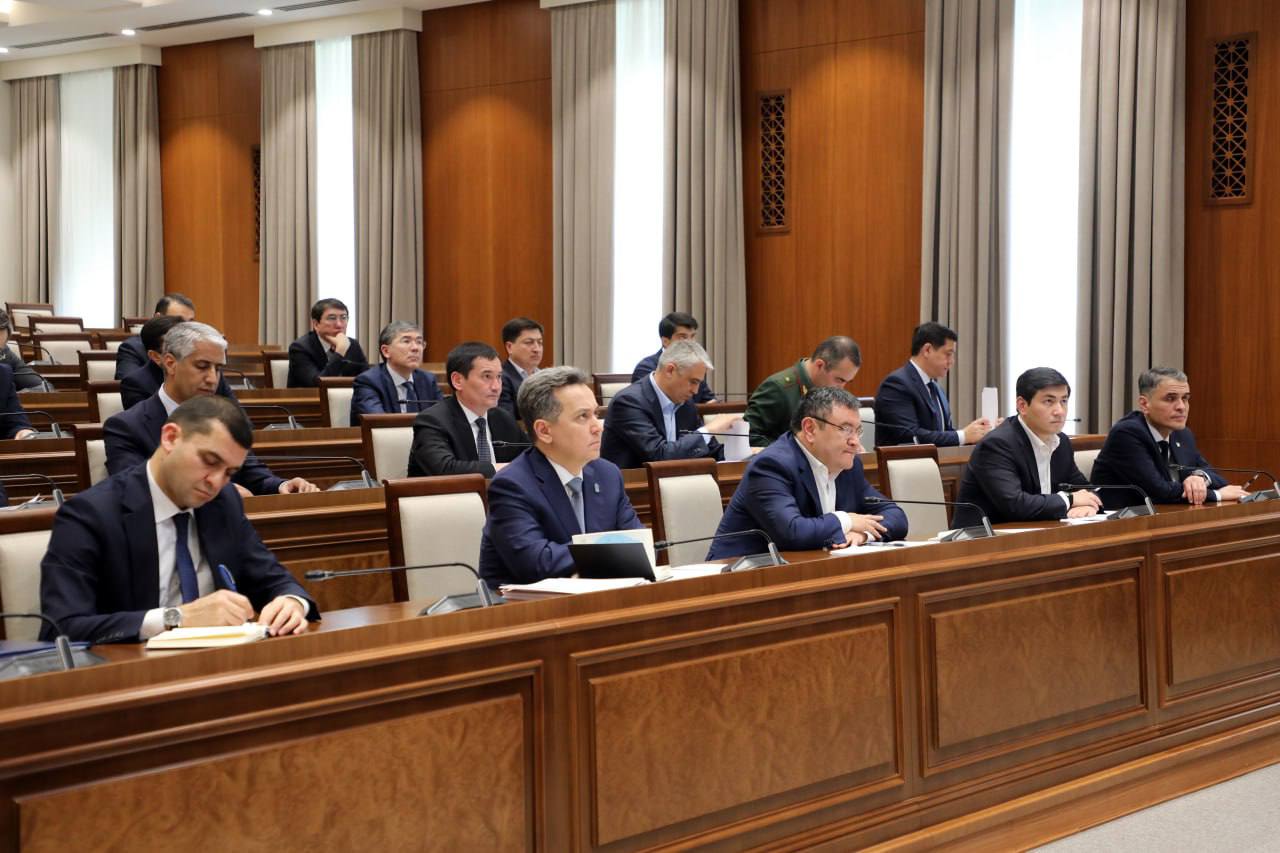
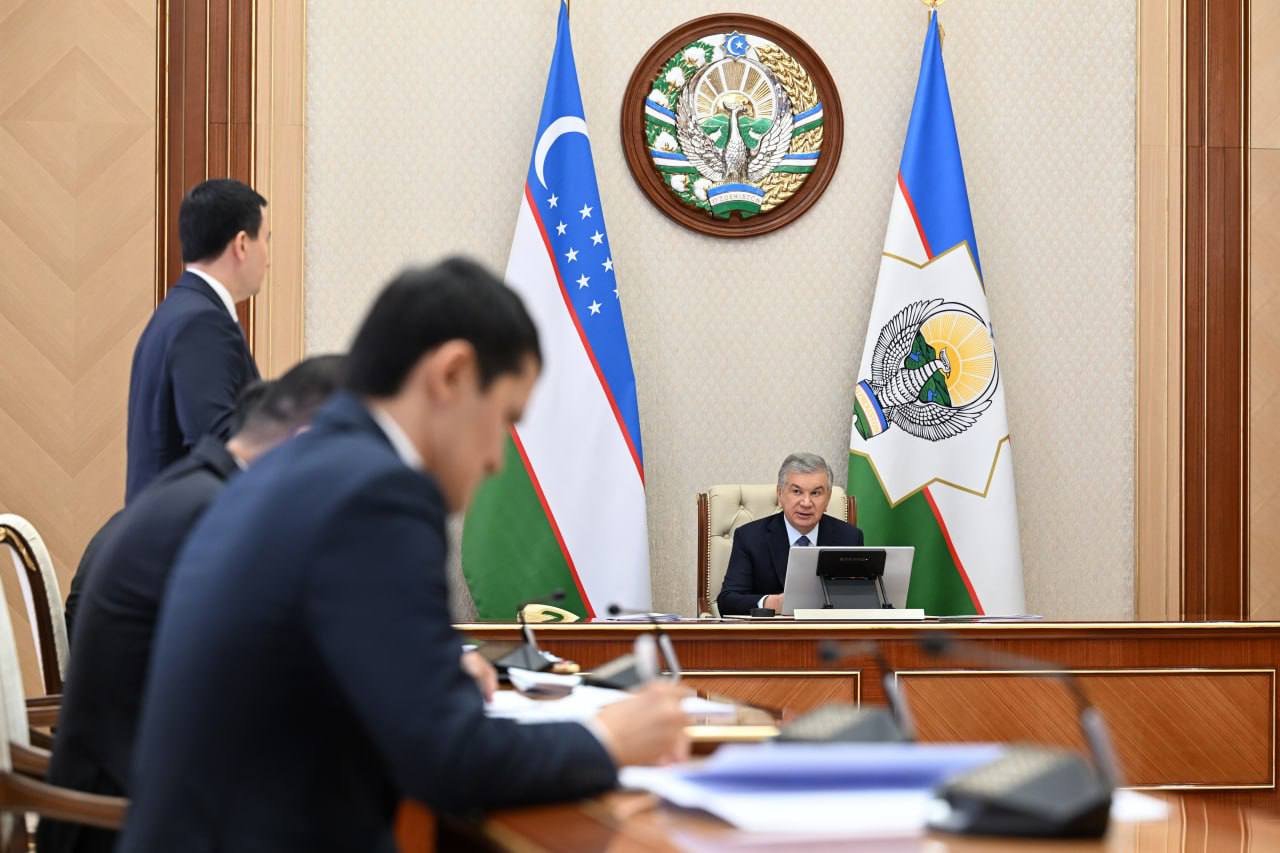
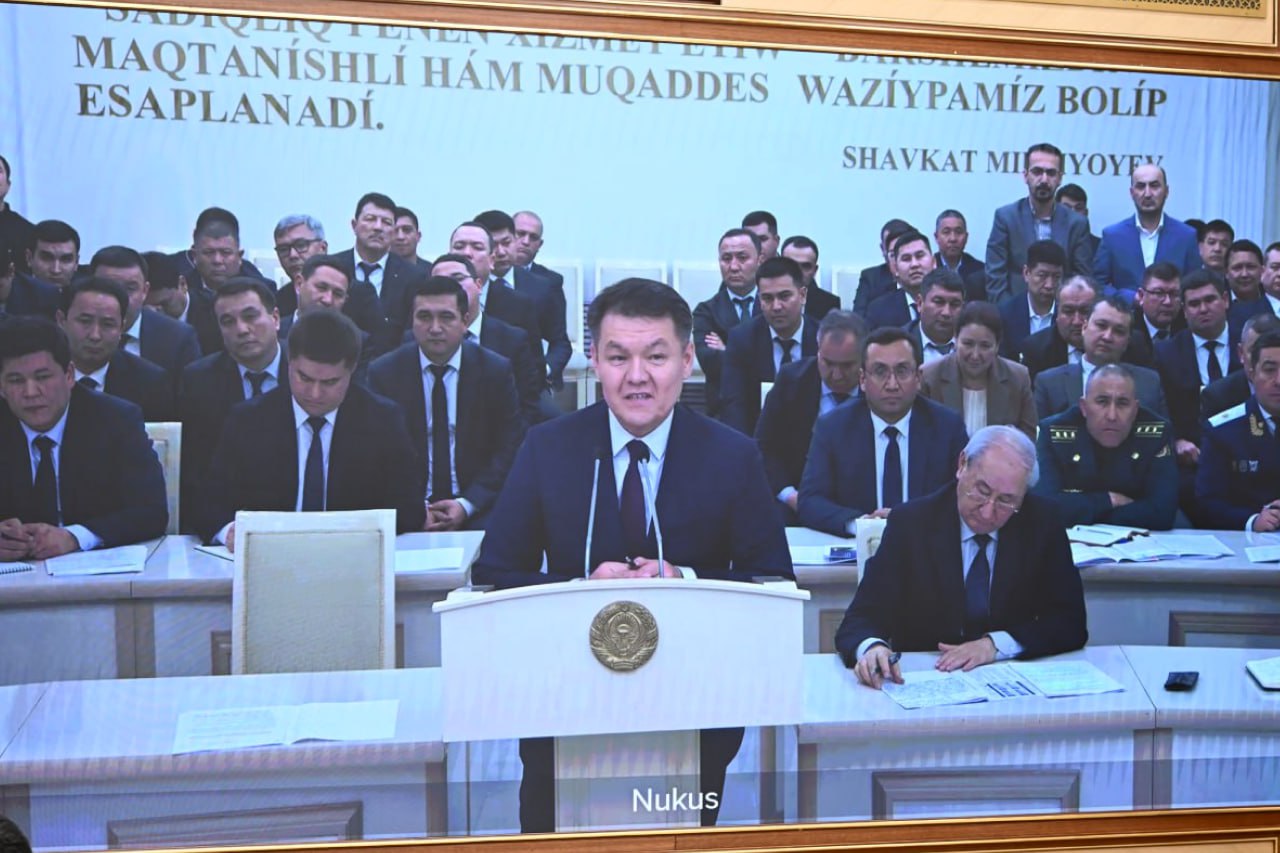
On February 20, upon returning to Tashkent from a working visit to Washington (USA), President Shavkat Mirziyoyev chaired a meeting on the effectiveness of ongoing reforms and the priority tasks for the socio-economic development of the Republic of Karakalpakstan.
Owing to its vast territory and mineral reserves, Karakalpakstan has considerable economic and investment potential. In particular, the region has identified reserves of 270 million tons of cement, 256 million cubic meters of construction and decorative stone, 200 million tons of lime, 31 million cubic meters of expanded clay, 30 million cubic meters of construction sand, 27 million cubic meters of brick raw materials, 6.9 million tons of glass, 6.5 million tons of gypsum, and 4.3 million tons of vermiculite.
At the same time, the significant distances between cities, districts, and villages require the effective use of the comparative advantages of each region and the organization of work based on precise calculations. In general, entrepreneurs prefer to operate in an environment characterized by favorable conditions and a fair, transparent system. Investors likewise channel capital into such regions.
It was noted during the presentation that tangible changes have taken place in Karakalpakstan’s economy in recent years. In particular, eight years ago, the region's economy ranked last in per capita terms, and today it has risen to seventh place. Whereas only 4 percent of industrial output was previously exported, this figure has now reached 30 percent. Compared to 2016, total exports have increased 3.5-fold, amounting to $2.1 billion.
Over the next five years, it is planned to expand the region’s economy to 102.5 trillion soums (54.3 trillion soums in 2025), increase per capita output to 51 million soums, and implement projects worth $7.2 billion in the industrial and service sectors.
The importance of utilizing all opportunities to increase exports to $900 million was emphasized (in 2025, this figure was 435 million dollars).
By the end of this year, it is planned to reduce the unemployment rate to 4.2 percent, the poverty rate to 3.2 percent, and to transform the city of Nukus, the Kungrad and Chimbay districts, and 109 mahallas into territories free from unemployment and poverty. In addition, the task has been set to halve the poverty level in the Bozatau, Kanlykul, Muynak, and Shumanay districts and 90 mahallas classified as areas with "difficult" conditions.
During the presentation, a proposal was put forward to extend the validity of benefits previously granted to the region in order to attract investment and promote entrepreneurship. The President supported this proposal.
The goal has been set to increase the volume of foreign direct investment in Karakalpakstan by 2.5 times (amounting to $3.5 billion in 2025).
A report was presented on major investment projects developed for the region.
These include projects to establish a modular intelligent computing center in the Takhiatash district for the AI sector, to build a technological cluster specializing in the production of components for the automotive industry, to establish the production of basalt fiber, to generate electricity through waste incineration in the city of Nukus, to establish a plant for extracting gold from coal in the Karauzyak district and a spinning mill in the Takhtakupir district, as well as to organize yarn production in the Chimbay district.
It was pointed out that the level of utilization of land resources in the agricultural sector does not correspond to the region’s potential. Only 2.5 percent of the available area is currently cultivated, while the remaining 16 million hectares remain largely unused. Tasks have been set to identify crop varieties suitable for the local climate, conduct scientific and practical trials, and increase exports by cultivating drought- and salt-resistant medicinal plants on a large scale, particularly those in demand in the pharmaceutical industry.
A decision has been made to introduce a separate position of Deputy Chairman of the Council of Ministers for the effective use of pastures and the development of animal husbandry. Tasks have been set to restore 10,000 hectares of pastures this year, introduce artificial intelligence-based plant monitoring, ensure early disease detection, and implement water-saving technologies.
This year, projects for the cultivation, storage, and packaging of animal feed will be launched in Kungrad, Chimbay, Beruni, Bozatau, and Kanlikul. In the Beruni district, a modern agro-complex with an annual production capacity of 36,000 tons of animal and fish feed will be commissioned.
The need to transform tourism into one of the main drivers of the region's development was emphasized.
A tourist and recreational zone will be created in the area of the Barsakelmes salt deposit, and glamping sites will be developed in areas resembling a Martian landscape in the Aral Sea region and on the Ustyurt Plateau. The Aral Sea History Museum will be modernized using modern technologies to demonstrate to the international community the consequences of the sea’s desiccation.
Through these measures, the task has been set to attract 500,000 foreign and 3 million local tourists to Karakalpakstan this year. To enhance the region's tourist appeal, additional incentives will be provided to well-known tour operators.
It has been decided to begin the implementation of a new system to support intellectual projects and start-ups in Karakalpakstan. An IT university and a technopark for startups are planned to be established at the Youth Socio-Economic Center. In addition, $5 billion in foreign investment is to be attracted for the development of artificial intelligence, and the use of data processing capacities, cloud services, and computing centers is to be increased tenfold. Instructions were given to launch 10 start-up projects worth $1 million each this year and to allocate 30 billion soums annually for these purposes from the Science Financing and Innovation Support Fund.
The task has been set to establish an Aral Logistics Center in Kungrad with "dry port" status, meeting international standards, by the end of 2027.
This year, 150 billion soums will be allocated for infrastructure projects in Karakalpakstan, and 2.2 trillion soums will be directed towards improving the centralized water supply. An additional $200 million will be attracted for projects involving the construction of drinking water and sewage networks, water distribution and treatment facilities, and roads.
At the conclusion of the meeting, President Shavkat Mirziyoyev instructed responsible officials to make full use of all available opportunities and resources to achieve the targets set for Karakalpakstan, and to organize work in each district and mahalla on the basis of precise calculations and a targeted approach in order to ensure the swift delivery of tangible results in improving the population’s quality of life.


When using materials reference to www.president.uz is required
© 2026 Official web-site of the President of Uzbekistan
All rights reserved
Attention! If you find an error in the text, select it and press Ctrl + Enter to notify the administration
